Posts

Showing posts with the label trading cards

Cards Mania Has a New Home: Visit Us at cardsmania.fun 🚀

Image
We’ve Moved Home! 👋 Dear collectors and cardboard connoisseurs, Cards Mania just leveled up. We’ve moved to our own shiny domain: cardsmania.fun . Why the move? Faster reads - less waiting, more ripping. Cleaner layout - your eyes and your PC will thank you. More content - guides, tips, market talk, and a sprinkle of hobby humor. What should you do? Bookmark cardsmania.fun Subscribe on the new site to catch fresh posts Tell a friend who still ships raw cards in a plain envelope Thank you for reading, trading, grading, and geeking out with us. Same Cards Mania energy, new address. See you at cardsmania.fun ! P.S. The blog here stays as an archive, but all new posts live at our new home.

Unveiling the Mystery Behind Grading: How Are Trading Cards Graded?

Image
Trading cards have become a multimillion-dollar industry, with rare cards selling for record-breaking prices. But beneath the surface of the hobby, whispers of manipulation and grading bias have sparked discussions—and some controversy. In this post, we explore how grading works, why it matters, and whether conspiracy theories hold any weight. The Grading Process: An Overview Grading companies like PSA, BGS, and SGC evaluate cards based on: Centering: How balanced the card’s image and borders are. Corners: Are the corners sharp and intact? Edges: Clean, chip-free edges are essential. Surface: Free from scratches, stains, or factory defects. How the Grading Process Works Submission: You mail cards in protective sleeves with a submission form. Pre-Screening: Cards are checked for visible shipping damage. Inspection: Experts evaluate card condition under lighting and magnificatio...

Title: The Wild, Weird, and Scandalous Side of Trading Cards

As we await the unveiling of this magnum opus, the digital shelves are gearing up to welcome a collection that's bound to redefine norms, setting a new benchmark in the trading card odyssey. The clock is ticking, and the world is watching with bated breath as we inch closer to the grand reveal. In the world of e-commerce, where every transaction is a testament to the game's legacy, the FFTCG Anniversary Collection 2024 is not merely a purchase but an investment in a legacy adorned with mystique and allure. Are you ready to delve into the unknown, to become a part of a legacy that's as enigmatic as it is exhilarating? Seize the narrative; embrace the FFTCG Anniversary Collection 2024—a realm where every card is a doorway to fantasy, a step closer to the legend that is Final Fantasy. Optimize your anticipation as the unknown unfolds its narrative in the heart of the Final Fantasy realm. With e-commerce platfo...

Top Apps to Catalog and Value Your Trading Cards

Image
Tracking Your Expanding Trading Card Collection Tracking your growing collection of trading cards can become overwhelming fast. But thanks to modern hobby apps, you can now catalog, value, and manage your cards with ease. 📚 TCDB (Trading Card Database) One of the most complete card databases available. TCDB offers detailed set information, checklists, and eBay-integrated sales data. It’s a great tool to track collection size and find card values fast. 📈 CLCT (Card Ladder Collecting Tools) Scan your cards directly into the app using your phone camera, and view real-time price graphs and historical data. It syncs across desktop and mobile, making it a top choice for both casual collectors and serious investors. 💰 Sports Card Investor If you're focused on profitability, this app offers tools to analyze price trends and track ROI on your sports card investments. Ideal for flipping and portfolio tracking. Whether you...

DID YOU KNOW #3 - 1952 series Topps cards burried in Atlantic Ocean

Image
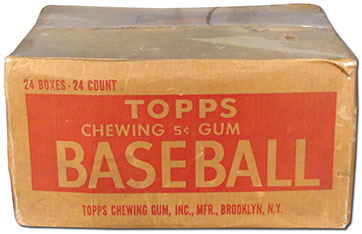
The Mysterious Disposal of 1952 Topps Baseball Cards In a surprising turn of events during the 1960s, a massive number of unsold cards from the 1952 Topps series were dumped into the Atlantic Ocean. Yep — you read that right! 1952 Topps Sealed Box So who gave the order? That would be Sy Berger — the man often referred to as the father of modern baseball cards. Sy Berger, the mastermind behind the set Berger joined Topps in 1947 and, along with Woody Gelman, helped create the 1952 set. Despite its now-legendary status, the cards didn’t sell well at first. In fact, they were such a surplus that Berger made the now-infamous decision in 1960: dump over two million unsold cards into the ocean. One of those cards? A now-priceless copy of Mickey Mantle’s legendary 1952 Topps card — regarded by many as the true Holy Grail of post-war baseball cards. Topps 1952 Baseball Cards — now legendary These days, that same Mickey ...

DID YOU KNOW #2 - Gary Pettis was not Gary Pettis?

Image
Gary Pettis' 1985 Topps Card… Starring His Brother? Baseball cards have seen their fair share of printing errors and quirky mistakes — but this one might be the most charming of all. In 1985, Topps released a card for then-California Angels outfielder Gary Pettis . The only problem? The guy on the card wasn’t Gary at all… it was his younger brother. The 1985 Topps card that started the confusion It all happened one Sunday at the ballpark. Pettis' younger brother had tagged along, wearing a uniform and running drills with other kids while the players were doing their thing. That just happened to be the day Topps photographers were snapping player shots for the upcoming set. Gary wasn’t even aware pictures were being taken… but his brother was out there, in full gear and looking pretty similar to his big-league sibling. As Gary later explained in an interview: "My brother would come out to the ballpark on Sundays and go out on the field. I gue...

DID YOU KNOW #1 - Topps Hocus Focus needs water?

Image
This Was Always My Favorite Part – Did You Know? As the first fun fact in what I hope becomes a long-running series, let’s rewind to one of Topps’ most curious creations: the Hocus Focus Magic Photo cards. From the very beginning, trading card producers knew that cards weren’t just collectibles—they were marketing tools. To stay ahead of the game, companies like Topps had to innovate. Cigarette cards had their time, but the 1940s needed something new. 🃏 Blank Cards With a Twist? Imagine opening a pack and seeing... nothing. Blank cards. But no misprint here! In 1948–49, Topps released a set where the magic only appeared with water and a special blue "magic paper" overlay. After wetting the card and applying the paper, an image of a player or actor would reveal itself—like a cardboard sorcery trick. 🗂️ The Set and Checklist The full set included 252 photo cards across sports (baseball, football, basketball, boxing) and entertainment (m...

Pokémon trading card game

Image
Before we talk a bit about Pokémon  card  game , we definitely should write a few words on where all did come from :) Long time ago a man called Satoshi Tajiri , big fan of bugs (some say, he wanted to become an entomologist) started to create games. His (and his friends) first productions were Pulseman , Yoshi and Mario & Wario . Those games were not a big success, but they were quite popular on the market. After some time, around 1990, still having this "bug geek" thoughts, Satoshi realized, that this might work out and invented Pocket Monsters. Nintendo was his first choice. It took some time to convince Nintendo to his idea, but when he finally did it, he immediately began working on the game ...

The Beginning of trading cards

Image
Nowadays, trading cards, collectible cards and all other cards are huge business with millions of dollars behind it. It doesn`t matter if it is a sport card, movie card or just a card released to promote something. Some are valued few cents, other can reach up millions for a single card. Have You ever wondered how it began? Well... this is a short story about it. Some say, that it all started somewhere around 1880 when John F. Allen and Lewis Ginter set up a company named... yes, you are right: Allen & Ginter. I will not focus on its history as a tobacco company obviously (nowadays its not politically correct to talk about cigs;), but Allen & Ginter had a very interesting idea of how to develop marketing of their products. Cigarette manufacturers were using paper cards putted inside cig packs to prevent cigarettes from being squeezed. They created and introduced cigarette card for collecting and trading purposes. Now the trade mark of Allen & Ginter is used by some other c...